
Sheri Joseph interview on “Angels at the Gate”
by Ian LIndsay · February 23, 2026Lit Kids to the Dark Tower Came
The perfect Dark Academia novel for English/lit majors in the know
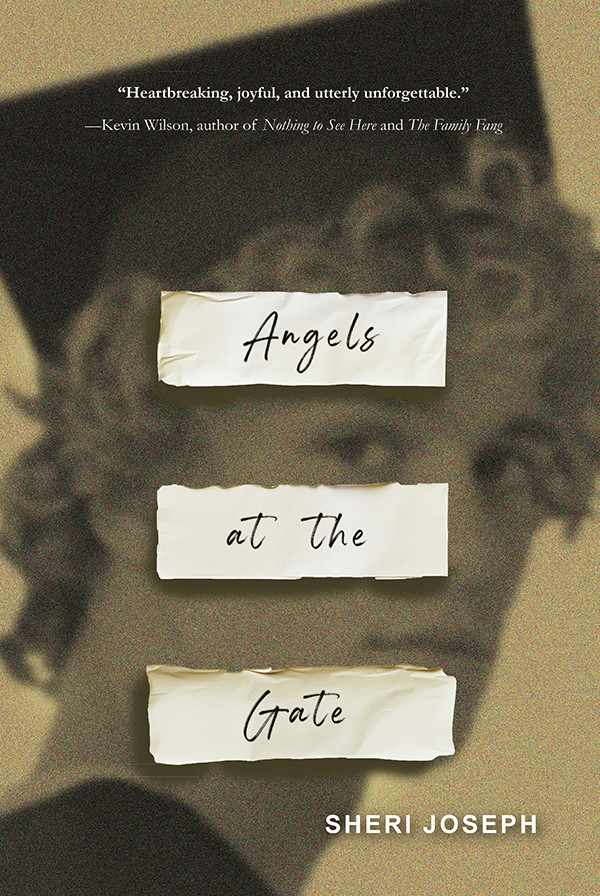
Quoting Shakespeare in casual conversation can be a gift or curse, depending on your disposition. For English/Lit majors, still defending our choice of study; we know casual literary reference could either be appreciated, or eye-rolled. Take a group of lit majors hiking Roark’s Steep. They pass wine jugs at plateau’s summit, snack on cheese, and write sestinas. All the while, speculating on the legends of Rockhaven, their Southern liberal arts university. This is the cinematic setting of Sheri Joseph’s campus novel Angels at the Gate. The campus is a perfect gateway into the novel’s mysteries. The conversations, steeped in literature, collide with the darker secrets of Rockhaven. Indulge in one of the best, real Dark Academia of the 2020’s.
Angels at the Gate Summary
At Rockhaven, readers meet Leah Gavin, a literature major. Leah and her friend group casually quote poetry. They are utterly passionate about literature, knowledge, and the freedoms of college. The novel explores Leah’s transformative years at Rockhaven. She is a female student on a “needs based scholarship”, and subsequently othered. Meanwhile, her male equivalents are of the wealthy, Greek-rushing boy variety. We watch Leah fall in love with poetry, navigate a complex and chauvinistic social stratum, and disentangle the mysteries behind an ominous death—all with a post-punk, late eighties soundtrack of moody synthesizers played in the shadows under Rockhaven’s Polk Tower.
Angels at the Gate fuses elements of dark academia, psychological thriller, and coming-of-age into a literary work of its own genre. I am a person jealous of those who can quote Shakespeare casually, and I often compare great literature to broccoli, not the most fun to consume, but its consumption is good for you. This comparison keeps me on the hunt for literary novels that drive reading into the deep night, flipping pages, a rarity. Joseph’s fourth novel has that kinetic power. Angels at the Gate tugs at both the synapse and heartstring—compelling readers past the hour of functional bedtime. Leah’s college experience is a story path where lit majors, ‘who-dun-it’ fans, and those with closets that house Joy Division’s Unknown Pleasures T-shirts all traverse with equal fascination.
Buy Angels at the Gate at Regal House Publishing or other book vendors.
Angels at the Gate. Sheri Joseph. $20.95 (305p) ISBN 978-1646036530
As a student fortunate enough to be in Dr. Joseph’s workshop, seeing the craft she teaches show up in both her students’ novels and her own is honestly really dope. We discussed the craft choices that make Angels at the Gate perfect for the lit kids, whether you enjoy or loathe the casual quoting of Shakespeare.
An Interview with Sheri Joseph
Lindsay: The setting and Leah Gavin, our protagonist, set up this novel for some of Joan Didion’s very fun insider baseball. Leah and her friends often wax academic, building reality off Shakespeare, poetry scansion, and allusions to an English Major’s curriculum. When you think of your reader, how do you imagine audiences, academics or otherwise, might respond to this insider baseball?
Joseph: I’m probably imagining readers who value education and find it appealing, if not English majors, as my main audience. I would have loved to write about a more esoteric field (classics, anyone?), but with all the English majors in the world, I’d be surprised if at least half of my readers didn’t feel like insiders on this sort of baseball. For outsiders, there’s enough context to follow.
Sheri Joseph on Character Count
Lindsay: In the early pages, we’re introduced, refreshingly, to a large cast of characters—Leah’s friends and schoolmates, all with significant roles — and I’m wondering, craft-wise, how you managed to develop and unveil such a large and complicated friend-group dynamic from early drafts to the final novel draft?
Joseph: In the early drafts, I was hoping to capture the full experience of Leah’s collegiate social scene, which meant I started with twice as many characters, and even then, I felt I was skimping, that more people than these few would matter to her. I still think introducing a large number of characters early in a book is one of the harder tricks to pull off, even after I reduced the number significantly. Much of the work I had to do in revision involved cutting characters, combining characters, all at the insistence of some beta readers, and especially my agent. And I’m still kind of mad about it, though I’m sure the novel reads better for the trim job.
Sheri Joseph on Obsession
Lindsay: When you think of readers’ obsessions, and maybe your own obsessions, what makes secrets, especially when we consider organized factions or secret societies, so enticing to readers?
Joseph: In a world like Rockhaven, which is essentially a closed room populated with like-minded young people — forced proximity, as it were — it’s easy to feel like you know everyone around you quite well and also that privacy is hard to come by, therefore an especially valuable commodity. It seems necessary both to have one’s own secrets and to be in on the secrets that seem to define what matters. Secrets are probably enticing in any story, but much more so when the world is enclosed and its players known. Power accrues around what can be kept apart from the majority, so secrets in common with a select few, as in secret societies, become extra appealing.
Sheri Joseph on Chapter Titles — How She Inserts Literary Easter Eggs
Lindsay: Also, a reader obsession: Easter eggs. The chapter title allusions function in a web-like reader experience. Chapter titles peel back the character’s psyche, allude to literature, deepen themes, and are sometimes directly referenced by the characters in surprising ways. Can you talk about your process in crafting the titles? As you think of the novel’s arc, did chapter titles direct when and where new plot and character details needed to be understood by the reader?
Joseph: The chapter titles were fun but became a bit of a puzzle as I went. All of them are lines of songs or poetry or Shakespeare that relate to falling (because the story is about a student who dies in a fall from the bell tower) and also speak to the central question of the chapter we’re in, besides often echoing back on earlier references.
The “falling” of Tennyson’s “The Eagle” comes up twice in chapter titles, besides multiple references in the text. And while that’s a poem that’s fully explicated from a few angles as part of the story, other references require more insider knowledge to fully get. For instance, the Shakespeare line “Thou wilt fall backward when thou hast more wit” is the title of a chapter that centers on sex, but the reader may or may not come to the book knowing that line as one of the Bard’s coy sexual references.
My biggest problem came with the lines from contemporary songs: lyrics turned to chapter titles, where I just couldn’t get the license to use the lyrics, so I had to change those at the last minute or twist them more than I wished to. While writing each chapter, I usually had a line in mind, but I wouldn’t say the lyrics directed the events. I was more interested in seeing what would happen when I inserted a line that felt right and let the characters’ analysis reveal some new facet, or let lines bounce off their mood in a natural way.
Sheri Joseph Shares Details on Leah, the main character of Angels at the Gate
Lindsay: Can you speak to some of Leah’s favorite poets and writers? Tennyson, Robert Browning, and of course, Shakespeare? And, for readers who haven’t read your novel yet, can you describe your selection process of these writers’ works?
Joseph: There I was really just channeling my own undergraduate years, thinking of what I had memorized at the time, mainly for fun but always in relation to classes I was taking. Shakespeare was a full year of my undergraduate coursework and a big part of comprehensive exams — I’m not sure I ever played dueling sonnets over a pitcher as my characters do, but I could have held my own at the game!
And actually, that was the kind of thing my friends and I liked to do, so I would not be surprised if we did, and I’ve just buried the memory. An important class both in the book and in my own college experience was Modern American Poetry, so there’s a lot of that as well.
Sheri Joseph on the Music in Angel’s at the Gate
Lindsay: In the same vein, the musical allusions coat the way Leah sees her world and how she frames this novel’s first tragedy. We get Jim Morrison, Depeche Mode, The Smiths…Again, for readers who have yet to make their way through Angels at the Gate, how do you imagine the music references inform, or sometimes defamiliarizes, the story?
Joseph: The first rule of fiction is to write what is true (for Leah in this case), even when results can feel a bit contradictory. My protagonist comes to college steeped in 70s rock and then finds herself flipped into the late 80s college scene, The Smiths and R.E.M. There’s also a Motown thread that has to do with music played at formals. So it’s both about bringing the reader into the sound of an era, the late 80s, and of this very particular place, where eras cross.
In choosing a song, I go first to reality: the most likely music that would be played by a particular character or in some specific setting. I don’t overthink it, just go with what I hear when I picture the scene. It’s sometimes about setting a mood, but more often I’m thinking: well, what would the person who made this mixtape choose to include? What would these dudes put on the stereo at this time on this kind of night?
Angels at the Gate explores Patriarchy in Academia
Lindsay: Fascinating, weird, authentic, human things are at the heart of this novel. One of those things is critiquing a specific kind of liberal arts education where the patriarchy shows up in nuanced, menacing ways. Do you imagine a school like Rockhaven has a chance of a more embedded patriarchal system? Or maybe patriarchal systems in a school like Rockhaven appear differently?
Joseph: Well, the patriarchy is everywhere, but Rockhaven is a place that’s not yet trying too hard to escape it or correct it. It’s a conservative school, aimed at the education of young gentlemen, and the prevailing attitude is: “Aren’t we broad-minded to make room for women in that education?” Rockhaven has noble intentions while crawling along about ten years behind the times, steeped in tradition that tends to reinforce the old ways in general. No one is stopping women from speaking out about inequality, but no one is encouraging it either.
Angels at the Gate: A Decade in the Making
Lindsay: In a panel, you mentioned this novel took a decade to write. In class, you’ve mentioned writing hundreds of pages to figure out the character. Would you say this is always your process for novels? Should writers slow down their writing processes, especially in the literary genre? Or, do you wish you could speed up? In any case, a novel like Angels at the Gate, I argue, is worth the wait.
Joseph: Thanks! I’m lucky I’ve never had to write a novel on deadline—I don’t understand how people do that. I’m sure some writers write both fast and well, or at least that some books come quickly, so I wouldn’t try to put forth any rules on the time it should take. But nothing annoys me more than literary fiction writers who think whatever they express in words is great and shouldn’t need work, or that some amount of time is “too long” to spend writing a book.
It takes what it takes, and if a writer doesn’t have standards high enough to meet that, I don’t have time to read that person’s work. But that said, my process varies by book, and I don’t always need 400 pages of excluded backstory, as with my previous novel, to get one going. I think this book had about 50 pages of that!
How To Write Real Characters — Advice from Sheri Joseph
Lindsay: How do you craft a character that readers equally despise and root for?
Joseph: I write characters who are as real as possible, then apply pressure where it matters.
I make sure to give them strong agendas and legitimate opinions that punch hard against those of others. I let characters be selfish and wrong when it’s true to them. I allow them to have enormous blind spots formed from visible context with which the reader can sympathize.
This is human, and writing the human is the best I can do. If I can get readers to argue over whether to like or side with a character, then I feel like I’ve accomplished my goals.
Moody Vibes — Sheri Joseph Captures Dark Academia
Lindsay: I love that! Speaking of agendas, your novel has a sense of the ominous cloaks and daggers, which, in some ways, literally make the page. For me, these cloaks and daggers made for a really compelling read. How does insidiousness play into the plot and create momentum (without spoilers, of course)?
Joseph: In this novel, when in doubt, I turned to Shakespeare, which is also the characters’ frame of reference. I have one character who is almost deliberately playing Iago — you know, for fun, as one does — plus I wanted to see if I could introduce some real danger into this idyllic college setting as well. Leah observes that a reader of Shakespeare is likely to pull plots from the air, but these are also young people testing themselves, creating their own reality in the form of plots. College life, literalized, can be some life-or-death drama!
Angels at the Gate — a novel for the discerning reader
Lindsay: A social media trend: photograph a bookcase and ask the Internet—what does my bookcase say about me? What do you imagine a bookcase with Angels at the Gate says about that reader?
Joseph: That they have exquisite discernment and a knack for finding obscure books, I’ll assume! Or they attended a very small liberal college like my alma mater.
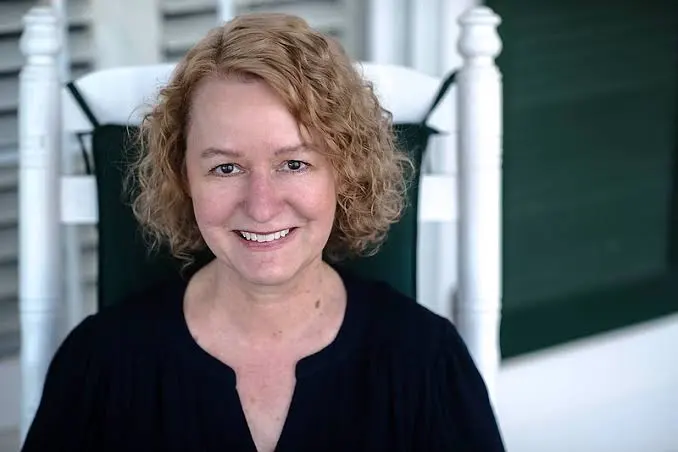
Sheri Joseph recently published her fourth novel, Angels at the Gate. Her previous books are the novels: Where You Can Find Me, Stray, and Bear Me Safely Over. Her short fiction has appeared in numerous literary journals. This includes The Georgia Review, Kenyon Review, Shenandoah, Virginia Quarterly Review, and Prairie Schooner. Joseph received awards for the National Endowment for the Arts fellowship and the Grub Street National Book Prize in fiction. Joseph also received numerous residency fellowships including MacDowell and Yaddo. She lives in Atlanta, where she teaches in the creative writing program at Georgia State University.
Buy Angels at the Gate at Regal House Publishing, or other book vendors.
Angels at the Gate. Sheri Joseph. $20.95 (305p) ISBN 978-1646036530
Ian Lindsay is a current Ph.D. candidate. As a Filipino American, he strives to examine hybridity and celebrate culture in writing. He is an assistant editor for Five Points. Read his work in The Raleigh Review, Pembroke, Variant Literature, Miracle Monocle, Pinyon, and more.